How Experience, Technical Knowledge, and Strategic Decision-Making Help Navigate Complex Inland Marine Losses.
Inland marine claims don’t follow a standard playbook. These claims typically involve property or equipment in transit, machinery, specialized cargo, or goods stored off-site, creating unique challenges that can quickly become complicated. From heavy machinery to sensitive cargo, inland marine losses often involve intricate logistics, multiple parties, and regulatory considerations that vary depending on the type of cargo and how it is being transported. No two claims look exactly the same, which makes experience and technical knowledge especially important.
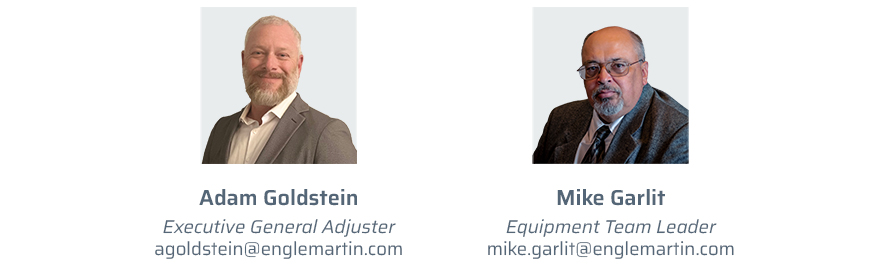
At Engle Martin, specialized adjusters help navigate that complexity every day. We spoke with Executive General Adjuster Adam Goldstein and Equipment Team Leader Mike Garlit from Engle Martin’s Specialty Marine & Transportation (SM&T) team to get their perspective on what sets inland marine claims apart and why that expertise matters.
Complexity Beyond Standard Claims
While property claims often rely on standardized estimating tools and repair models, inland marine losses, especially those involving heavy equipment, require a far more hands-on approach.
“There is no estimating program that draws from a database for part pricing and industry accepted labor times,” Goldstein explains. Instead, adjusters are often coordinating directly with manufacturers and repair shops, pulling together real-world pricing and market insight to figure out what repairs should cost and what the equipment is actually worth.
Even within the same category, equipment can vary quite a bit from one unit to the next. From assessing the damage to deciding whether something makes sense to repair or should be written off, there’s a lot of judgment involved at every stage.
When Expertise Changes the Outcome
In managing these specialized claims, knowledge doesn’t just improve efficiency, it can significantly impact the financial outcome.
Goldstein recalls a large loss involving quarry equipment damaged during a flash flood. Rather than defaulting to a total loss, the team coordinated to have a high-value machine disassembled, shipped back to its country of origin, and fully refurbished. As a result, the equipment was restored at roughly half of its total value, preserving a substantial portion of the claim.
Garlit shares a very different, but equally complex, scenario involving a rail collision with a shipment of live agricultural cargo. Because much of the load consisted of high-value breeding stock, the incident resulted in a particularly significant loss. The unusual and sensitive nature of the cargo also required specialized handling and response measures.
These types of claims highlight the fact that specialized situations require specialized thinking.
Hidden Challenges Clients May Not Expect
Many inland marine claims involve factors that aren’t immediately obvious at first notice of loss.
For cargo claims, Garlit points out that branding and regulatory requirements can complicate recovery efforts. Certain goods cannot be salvaged due to brand protection concerns, while others, such as regulated materials, require strict disposal protocols.
Heavy equipment claims come with a different layer of complexity. Goldstein notes that rental agreements, coverage details, and contract responsibilities can all influence how a claim is handled. At the same time, delays in towing, storage, or cargo transfers can quickly increase costs if they aren’t addressed early, making timing a key factor.
What Specialized Adjusters Bring to the Table
Handling inland marine losses takes more than general claims experience. It calls for a mix of technical know-how, an understanding of regulations, and the ability to keep a lot of moving pieces aligned.
Goldstein points out that you have to really understand how equipment works and how different types of damage affect it. At the same time, you’re staying in close contact with carriers, insureds, and vendors to keep everything moving.
Garlit adds that documentation and compliance play a big role, especially when transportation regulations and contract terms come into play and can affect liability. At the end of the day, it really comes down to experience and paying attention to the details.
Driving Better Outcomes Through Expertise
The impact of a specialized adjuster is felt across every stage of a claim.
From reducing unnecessary costs and avoiding delays to identifying potential recovery opportunities, experienced adjusters help ensure that claims are handled accurately and efficiently. As Garlit explains, having an adjuster with the right expertise “helps prevent our clients from paying claims they may not need to pay.”
Goldstein adds that early intervention, whether it’s moving equipment to reduce storage fees or identifying potential subrogation opportunities, can significantly influence the overall outcome.
A Specialized Approach to a Complex Field
Inland marine claims are rarely straightforward. Each loss brings its own unique challenges and requires a thoughtful, experienced approach. Engle Martin’s Specialty Marine & Transportation team understands the complexities involved and delivers the expertise needed to navigate every claim with care and precision.
Contact Our Team to Learn More
For more information, email us at info@englemartin.com.